Fused phosphate fertilizer from Lào Cai: composition, benefits, and where it works
Plain-language overview of LAFCO fused magnesium phosphate (FMP) from Lào Cai — specs, acidic-soil agronomy, crops served, and export compliance signals.
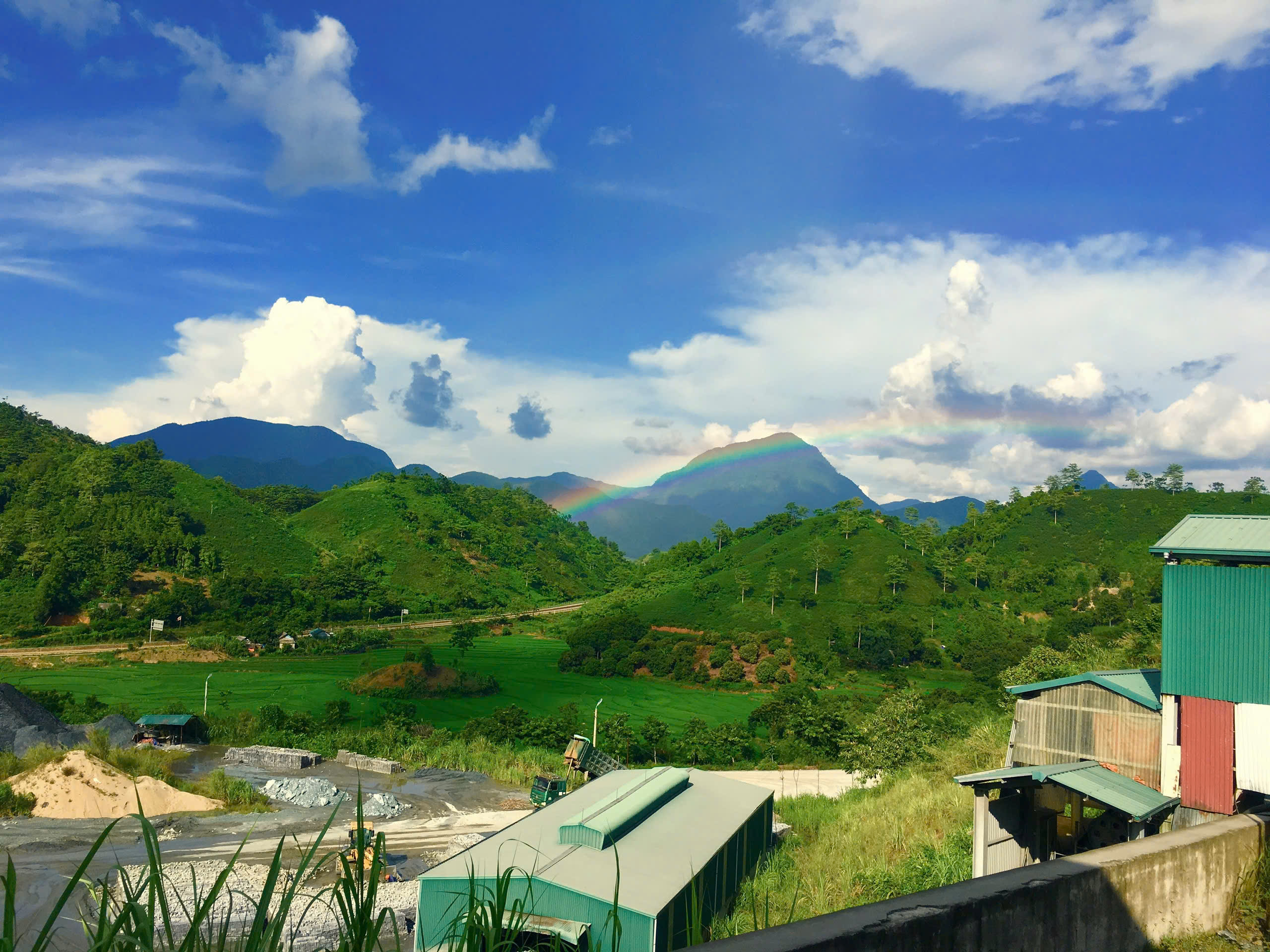
Across most of Vietnam's northern highlands, soils are structurally acidic. Tea gardens in Phú Thọ, coffee plantations in Sơn La, single-crop rice in Lào Cai, Yên Bái, and Lai Châu — field pH routinely sits below 5.0, mobile aluminium and iron fix phosphate into forms plants cannot absorb, and every cycle of super phosphate compounds the problem because its sulphate residue acidifies the soil further. Fused magnesium phosphate (FMP) is engineered for the opposite case: a slow-release, alkaline phosphate that carries calcium and magnesium with it.
LAFCO's fused phosphate fertilizer from Lào Cai is the FMP that Vietnamese growers and export partners have been buying from the Bảo Hà plant since 2009.
What it is
FMP is manufactured by melting apatite and serpentine ore together at temperatures above 1,400 °C, then quenching the molten mineral in water to lock it into an amorphous, glass-like structure. That structure is the point: it is insoluble in water but soluble in the weak organic acids that plant roots secrete — so phosphate is drawn down on demand rather than leached in a single flush.
LAFCO operates a 200,000 t/year FMP line plus a 50,000 t/year NPK line at its Bảo Hà plant, supplied from the company's own licensed mines at Hợp Thành–Cam Đường (apatite), Thượng Hà (serpentine) and Văn Bàn (kaolin–feldspar). Combined licensed reserves exceed 25 million tonnes.
Specification
Declared figures, per QCVN 01-189:2019/BNNPTNT (the Vietnamese fertilizer standard issued by MARD):
- P₂O₅ (available) ≥ 15%
- CaO ≥ 26%
- MgO ≥ 14%
- pH ≥ 8
- Available silicon (unquantified but present — particularly relevant for rice and sugarcane)
- 50 kg bags; bulk and big-bag options available on order
Cadmium and arsenic levels are low — the grade accepted by Japanese and Korean buyers for tea and citrus programs. We can share a typical heavy-metal profile on request under NDA for export due-diligence.
Why FMP wins on acidic soils
- It does not re-acidify the soil. Super phosphate's residual sulphate pushes pH down further; FMP's calcium silicate base nudges pH up by 0.3–0.5 over two to three application cycles, cutting or eliminating routine liming.
- It resists leaching. Because it is not water-soluble, FMP stays on the profile and releases only to root-exudate acids — meaningful on sloped terrain and in high-rainfall monsoon regions where super phosphate moves off the field.
- It carries Ca and Mg. Both are chronically deficient on acidic soils; one fertilizer replaces three line items (phosphate + lime + magnesium supplement).
- It supplies silicon. For rice and sugarcane, silicon markedly improves stalk strength and disease resistance.
- It pairs cleanly with nitrogen. Standard protocol is FMP as a base application at land preparation, then urea or balanced NPK as the in-season top-dressing — not a competing product, a complement.
Crops and regions we serve
Within Vietnam, FMP is a base fertilizer for:
- Paddy rice on acid-sulphate and low-pH soils — typical 400–550 kg/ha as a base application.
- Tea in northern midlands (Phú Thọ, Thái Nguyên, Yên Bái, Lào Cai).
- Coffee in Sơn La, Điện Biên, and the Central Highlands.
- Rubber and sugarcane on acidic basaltic soils.
- Perennial fruit — pineapple, citrus, lychee, longan — applied as a base dressing at planting.
On the export side, LAFCO ships FMP to Japan and Korea (premium low-Cd/low-As grade for tea and citrus), Malaysia, Indonesia, and Thailand (palm and rubber estates), with secondary volumes to Taiwan, India, and Bangladesh. Shipment is typically via Hải Phòng port, with container and bulk options from the Bảo Hà plant.
Where FMP is not the best fit
We mention this because we get the question. On neutral-to-alkaline soils (pH > 7.0) and for short-cycle leafy vegetables on fertile alluvial soils, a water-soluble source like single super phosphate or DAP will out-perform FMP on cost-per-response. FMP's structural advantage is acidic, weathered, leaching-prone soils — it is not a universal replacement.
Compliance and documentation
- Product standard: QCVN 01-189:2019/BNNPTNT (MARD circular on mineral fertilizers).
- Company registration: JSC incorporated 15 July 2009; tax code 5300319727; registered office at 348 Nhạc Sơn Street, Lào Cai ward, Lào Cai province, Vietnam.
- Plant: Bảo Hà Industrial Park, Bảo Hà commune, Lào Cai province.
We can provide certificates of analysis, quality system documentation, and sample shipments on request — standard for new distributor or export partners.
Contact LAFCO
- Phone: +84 975 495 789 · +84 333 571 351
- Email: plnclc2009@gmail.com
- Request a quote: contact form
- Products overview: LAFCO products
Distributors and export partners receive a response within one business day. Agronomy and logistics questions are welcome — our team handles rate recommendations by region and coordinates truck, container, or rail freight from the Bảo Hà plant.