
Fused phosphate vs single super phosphate on acidic soils: a practical comparison
Side-by-side comparison of fused magnesium phosphate and single super phosphate on acidic, weathered soils — solubility, pH response, leaching, and total input cost.
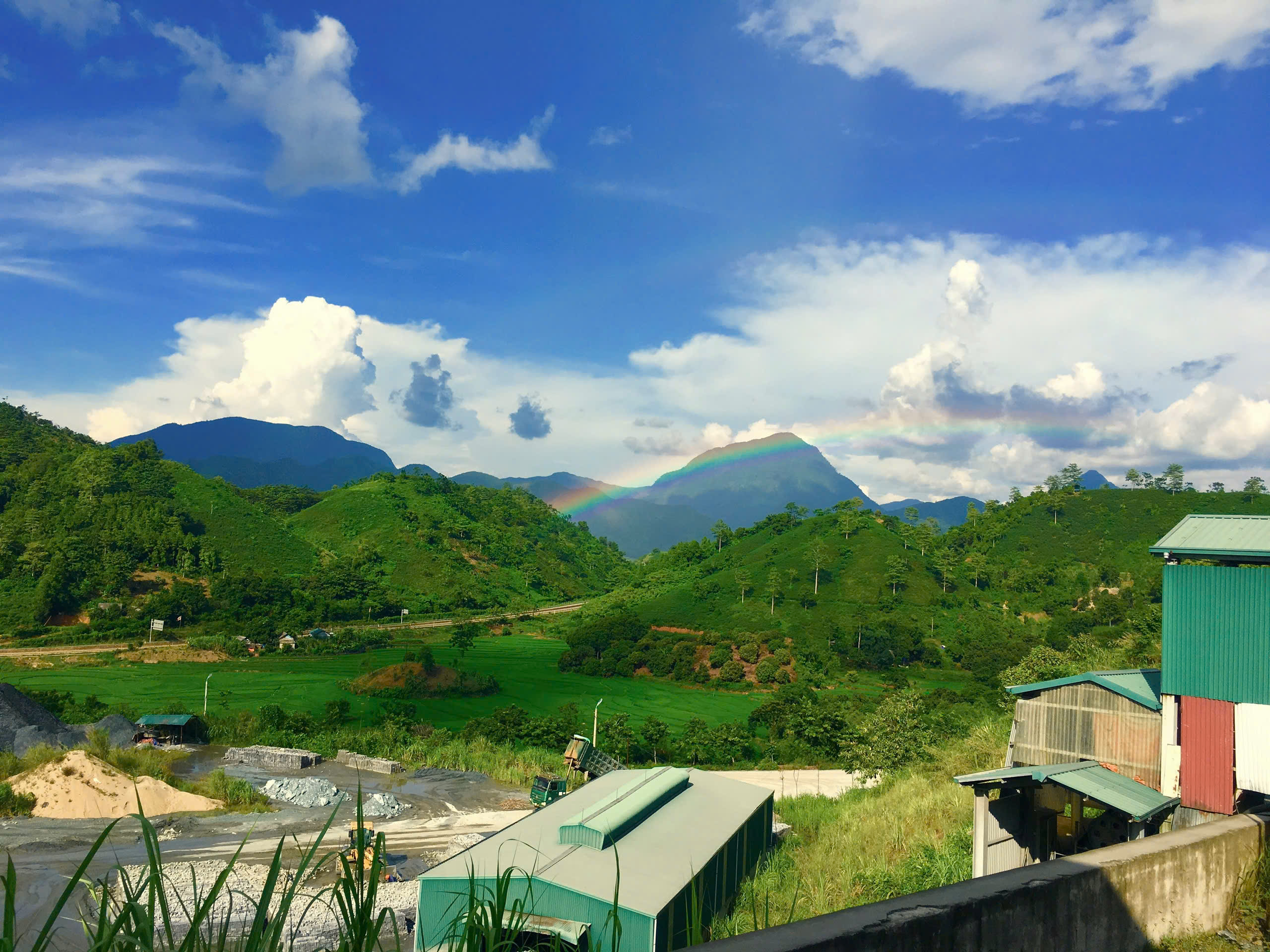
On acidic, weathered soils — the northern highlands of Vietnam, Indonesia's volcanic uplands, Malaysian oil palm on kaolinitic ultisols, Sri Lanka's tea country — the two phosphate fertilizers most commonly stocked side by side are fused magnesium phosphate (FMP) and single super phosphate (SSP). They cost similar per kg, they both carry a "phosphate" label, and to a new procurement manager they look interchangeable. They are not. On a soil with pH below 5.5, the wrong choice can leak 30–40% of the applied phosphate off the field and continue to acidify it season after season.
This post walks through five practical differences that matter on acidic soils: dissolution mechanism, pH response, leaching resistance, micro-nutrient bundle, and total input cost.
1. Dissolution mechanism — the root difference
SSP is produced by reacting phosphate rock with sulphuric acid, producing mono-calcium phosphate (Ca(H₂PO₄)₂), which is fully water-soluble. Once applied, it dissolves into soil solution within hours to days.
FMP from LAFCO's Bảo Hà plant is produced differently: apatite and serpentine are co-melted above 1,400 °C and quenched rapidly in water, producing an amorphous, glass-like calcium-magnesium-silicate-phosphate. The product is insoluble in water but soluble in weak organic acids secreted by plant roots — which means the acidic root zone of crops on low-pH soils becomes the natural solvent.
On neutral soils (pH 6–7), SSP's rapid availability is an advantage. On acidic soils (pH < 5.5), FMP's demand-driven release becomes the more valuable property.
2. pH response — SSP acidifies, FMP neutralises slightly
SSP contains roughly 8–10% residual sulphate from its acidulation step. On acidic soils, this sulphate interacts with mobile aluminium and iron to generate additional acidity — a cumulative effect that shows up as steadily declining pH after repeated seasons.
FMP is alkaline (pH ≥ 8). Applied to acidic soil, its calcium-silicate and magnesium-silicate fractions neutralise part of the hydrogen and aluminium load. Two to three application cycles typically lift soil pH by 0.3–0.5 units — equivalent to a light lime application without the separate logistics, truck, or labour line item.
On aggressively acidic fields, a common protocol with SSP is SSP + lime + MgSO₄ applied as three separate inputs. FMP consolidates all three roles into one bag.
3. Leaching resistance — sloped and high-rainfall fields
Tropical highland agriculture has three features that break SSP economics: sloped terrain, intense monsoon rainfall, and shallow rootable depth. SSP is water-soluble — heavy rain carries the dissolved phosphate off the field or down past the root zone. Internal field observations and published survey work in the region put first-season phosphate loss on sloped acidic fields at 30–40% with SSP.
FMP is not transported by the same mechanism. The granule holds position on the soil surface and only opens to root-exudate contact. For tea gardens in the Vietnamese midlands, coffee in Sơn La and Điện Biên, rubber in southeast Vietnam, and palm estates across Malaysia, Indonesia, and Thailand, this leaching-resistance property is the primary reason FMP is specified.
4. Nutrient bundle — three in one vs. one in one
| Nutrient | SSP | LAFCO FMP |
|---|---|---|
| Available P₂O₅ | 16–18% | ≥ 15% |
| CaO | ~20% (sulphate-bound) | ≥ 26% (silicate-bound, plant-available) |
| MgO | None | ≥ 14% |
| Available silicon | None | Present |
| pH | ~3 (acidic) | ≥ 8 (alkaline) |
On acidic soils, the three chronically deficient nutrients are P, Ca, and Mg. FMP supplies all three. SSP supplies P and a sulphate form of Ca — and that sulphate is what acidifies the soil further.
Silicon is the quiet nutrient — not visible on a single-season trial, but for rice and sugarcane it measurably improves stalk strength, lodging resistance, and disease tolerance. SSP does not carry it.
5. Total input cost — not the bag price alone
Comparing the bag price of FMP and SSP at the distributor does not reflect total on-farm economics. On acidic soils, SSP users typically add:
- Agricultural lime for pH management, 300–500 kg/ha/year.
- Magnesium sulphate or dolomite for Mg correction, 50–100 kg/ha/year.
- An uplifted P application rate the following cycle to compensate for leaching losses.
FMP consolidates those roles. Per-kg of applied P₂O₅, the bag can cost a few percent more; total per-hectare cost on acidic soils — once lime, Mg, and the leaching premium are included — is typically lower.
We have heard this story repeatedly from tea estates in Thái Nguyên, coffee producers in Sơn La, single-crop rice operations in Lào Cai, and palm estates across southeast Asia: switching from an SSP + lime + MgSO₄ protocol to a straight FMP base application has reduced both labour hours and material cost over two to three cycles.
When to choose which
Choose FMP (LAFCO fused phosphate from Lào Cai) when:
- Soil is acidic (pH < 5.5), acid-sulphate, or saline.
- Perennial or long-cycle crops — tea, coffee, rubber, palm, orchards — need slow-release phosphate across the season.
- The field is sloped or high-rainfall, and leaching is a real concern.
- You want to consolidate phosphate + lime + magnesium into one product.
Choose SSP when:
- Soil is near-neutral to mildly alkaline (pH 6–7.5).
- Short-cycle crops need fast phosphate uptake — leafy vegetables and some improved rice varieties on fertile alluvial soils.
- The application is a targeted in-season top-dress rather than a base.
There is no universal answer. The decision turns on soil chemistry and crop cycle length — not the bag price on the distributor shelf.
Talk to LAFCO
- Phone: +84 975 495 789 · +84 333 571 351
- Email: plnclc2009@gmail.com
- Request a quote: contact form
- Product overview: LAFCO products
Our agronomy and export teams respond to distributors and export partners within one business day. Happy to share certificates of analysis, heavy-metal profiles (for Japanese/Korean compliance), and reference trial data on request.
Related: